
As an HR professional, you are aware that a wealth of data is available, but it can be challenging to decipher its meaning. You might be watching how many people leave your firm, trying to figure out what really makes people more engaged, or wondering if your hiring process is fair. With numerous reports, spreadsheets, and data, it's easy to get lost.
These tools help keep HR data more organised and less messy. They take raw data and turn it into useful, unambiguous information that enables you to spot patterns, spot problems early, and make decisions you can stand by. With the right tools, you don't have to guess why people are leaving or what makes a team perform well. You can see both the big picture and the small details simultaneously.
This in-depth review cuts through the noise. We discuss the 8 Best Tools for HR Analytics that real HR teams utilize to simplify reporting, save time, and enhance business outcomes. We don't use any jargon or fluff; just honest pros, cons, and valuable recommendations. Regardless of the size of your business, you can find a solution that meets your needs and helps you work smarter, not harder
Key Features That All HR Analytics Tools Should Have
Because they all have great dashboards and features, it can be hard to choose between the top 8 HR analytics solutions. But this is what really matters:
Easy to combine data
The answer should be able to gather data from your other HR systems, like payroll, performance management, time tracking, and others. If it can't connect, it doesn't help much.
Reports and dashboards that are simple to read
Analytics should help you understand your data, not make it tougher. Look for pictures that are easy to see. With just a few clicks, you should be able to see patterns.
Customisation
Every business is different. The eight best HR analytics solutions enable you to create reports that meet your specific needs, not just the ones the vendor deems essential.
Safety
You are handling private data. Look for features such as encryption, user permissions, and adherence to the applicable privacy rules for your situation.
Real-time updates
HR gets things done fast. Your tool should collect the most recent data so you don't base your choices on last month's information.
Insights that Make Predictions
Some systems utilize AI or machine learning to identify patterns and alert users to potential issues, such as high turnover or problematic hiring areas.
Good aid and training
There is no such thing as a flawless tool. Fast, clear help saves you time.
Ability to grow
You might start small. But your HR analytics platform should be able to evolve with your organisation.
These 8 best HR analytics tools all cover these areas in some way. Some do it better than others, so take a look at the details before making a choice.
A Quick Look at Tools for HR Analytics
HR analytics were once quite useful. It is now the most crucial aspect for running a successful creative HR team. HR analytics tools show you who's performing well, who's having difficulties, where you're spending too much, and where you could do better.
These are the eight best HR analytics tools and what you can expect from each one:
Keep an eye on turnover and retention: Know when and why people depart
- Pay attention to diversity and inclusion: Evaluate how your hiring and promotion processes compare to those of others. Instead of just filling open roles, plan forward for staffing needs.
- Spot Trends: Look for patterns in salary differences, absenteeism, or performance. Automate reports that used to take hours to finish, so that you can save time.
- Cut Costs: Identify areas where you're overspending on hiring or overtime.
These eight best hr analytics tools aren't just for huge companies. Most of them work well for groups of 20 to 2000 people. As HR technology continues to improve, you'll continually see new features and concepts emerge.
A Closer Look at the 8 Best Tools for HR Analytics
Let's get to work now. Here are the eight best HR analytics tools, along with honest appraisals of what works, what doesn't, and how much they will cost you.
1. Visier
Features:
- HR dashboards that are already set up for salary, turnover, and diversity and inclusion
- Putting together data from multiple places
- Using predictive analytics to keep current employees and find new ones
- Access based on role
| Pros | Cons |
|---|---|
| ✔️ Very adept at viewing the whole picture | ❌ Can be overwhelming for small teams |
| ✔️ Works for businesses with a lot of moving parts | ❌ Takes time to set up |
| ✔️ Predictive features help find problems before they happen |
Prices: Prices are set by the customer. If you have a large staff, you can expect to incur higher costs.
2. Workday
Features:
- All of your HR, payroll, and analytics needs in one location. Options for in-depth reporting
- You may use it on the fly. It integrates with various HR and finance systems.
| Pros | Cons |
|---|---|
| ✔️ A single place to get help with finance and HR | ❌ Can be expensive |
| ✔️ Suitable for businesses all across the world | ❌ Hard for new users to learn |
| ✔️ Regularly updating items |
Prices:
Prices vary based on the size and features of the business, but are generally best suited for medium to large companies.
3. ADP Workforce Now
Features:
- Payroll, HR, and analytics all in one location. Dashboards that you can alter.
- Keeping track of compliance
- Using apps made by other firms
| Pros | Cons |
|---|---|
| ✔️ A lot of support | ❌ Some advanced analytics programs require additional software |
| ✔️ Easy to use payroll and HR | ❌ Interface can feel outdated |
| ✔️ Good for US businesses |
Costs: You begin with basic payroll and then add analytics as needed.
4. BambooHR
Features:
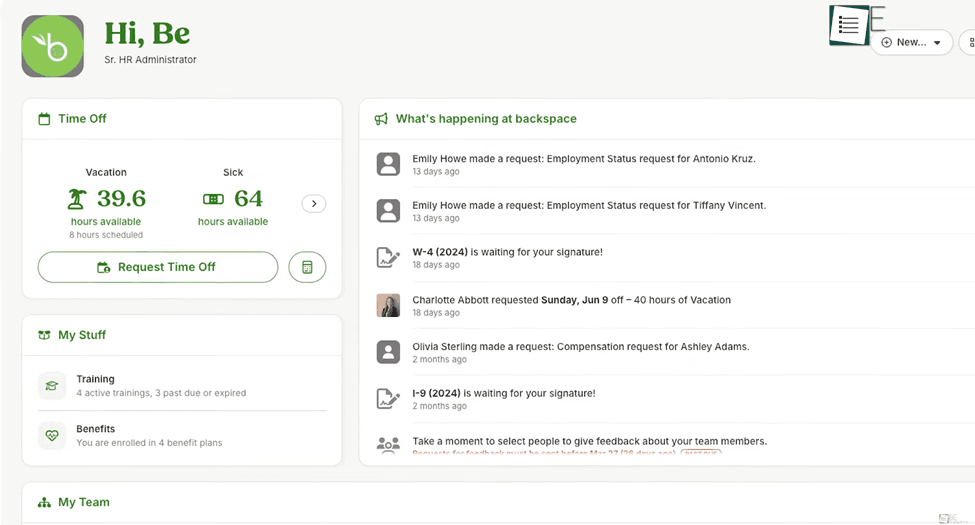
- Keeps track of employees and analyzes their data
- Simple reports (such as turnover and retention)
- Connecting to job boards and payroll
- Workers may help themselves.
| Pros | Cons |
|---|---|
| ✔️ Simple for teams of small to large size to use | ❌ Can't do in-depth analysis |
| ✔️ Plans for novices who don't want to spend a lot of money | ❌ Not suitable for big businesses |
| ✔️ Very helpful |
Prices: Clearly show the prices for each employee. Grows with you.
5. SAP Success Factors
Features:
- HR, analytics, and talent management.
- More complex methods to look at data.
- keeping track of goals and performance reviews
- AI-powered insights
| Pros | Cons |
|---|---|
| ✔️ Highly customizable | ❌ Can be too much for small firms |
| ✔️ Works for businesses that are big and complicated | ❌ Requires time and assistance from IT to get started |
| ✔️ Features for following the rules around the world |
Prices: Quotes made just for you. Most of the time, for big businesses.
6. Zoho People
Features:
- Basic HR and data analysis
- Keeping track of who is present and who is not
- Reports that are just for you
- Works with other Zoho programs
| Pros | Cons |
|---|---|
| ✔️ Not expensive | ❌ Not as detailed as specific business tools |
| ✔️ Simple, easy-to-use UI | ❌ Not a lot of predictive analytics |
| ✔️ Works for teams that are small or growing |
Costs: Costs are modest each month. Pay for every user.
7. IBM Kenexa
Features:
- Management of talent and analysis of data
- Making plans for the workforce
- An analysis that predicts
- Connecting to IBM Watson AI
| Pros | Cons |
|---|---|
| ✔️ Strong hiring analytics and AI-powered insights | ❌ Can be too complicated for small HR teams to use |
| ✔️ Great for significant data needs | ❌ Higher price |
Prices: Prices for businesses; quotes are made to order.
8. PeopleFluent
Features:
- Tools for compensation, performance, and analytics
- Dashboards that are just for you. Works with tools for hiring and learning.
- Reporting in real time
| Pros | Cons |
|---|---|
| ✔️ Works effectively for groups with a lot of needs | ❌ Interface isn't as modern as it could be |
| ✔️ Integrations that can be modified | ❌ Takes time to learn |
| ✔️ Focus on getting your employees involved |
Prices: The buyer sets the prices. Works for businesses of mid-to-large size.
When you hunt for the top tools for HR analytics, these names keep coming up. They are real HR teams, not just advertising. Select the right tool based on the size of your business, your objectives, and your budget.
A user-friendly analytics tool can significantly enhance your HR strategy
What are the best features of the eight best HR analytics tools? You don't need to have a degree in data science to use them. Most of them are created for real HR workers who already have a lot on their plates. You sign in, connect your current systems, and start seeing results.
BambooHR and Zoho People may be suitable options if you have a small HR team.
Visier or Workday makes it easier for larger teams to collaborate.
A simple dashboard can show you how many employees you're losing, how long it takes to fill available positions, or if your salary is comparable to the market. It's typically straightforward to send a report to your boss or team; click on it.
These 8 best HR analytics solutions are designed to integrate with your work, not take over. They help you spend less time on spreadsheets and more time on important things.
To make informed HR decisions based on data, select the appropriate analytics software that suits your needs. Most HR teams know they need to "use data." But you can do this with the eight best HR analytics solutions. Stop guessing and discover what's really happening with your employees.
Plan:
Identify problems before they escalate into emergencies.
Make the Case:
Use real numbers to support your funding or personnel requests.
Your analytics solution can also integrate with your other HR systems, which means you spend less time transferring data. You can focus on the most important things, such as ensuring your employees are happy, productive, and growing.
Each of the eight best hr analytics software programs has its own unique characteristics. Some are designed to grow quickly. Some people really look into turnover or engagement. However, they all help you make better decisions without requiring a extra work.
Last Thoughts
Choosing one of the eight best tools for HR analytics is a significant challenge. Create a list of the things you need most, such as simple reporting, valuable insights, or an easy setup, and request demonstrations. Connect with other HR teams. Remember that the best tool is the one that fits your workflow, not the one with the most features.
If you're tired of messy spreadsheets, these apps can help you obtain helpful answers from your HR data. There's no hoopla or protracted sales pitch - just honest advice to help you do your job better.
FAQ
What are the most essential features to look for in software for HR analytics?
Real-time dashboards, automatic reporting, predictive analytics, and configurable metrics are some of the most essential features. Look for tools that can work with hiring, payroll, and benefits systems. The design should be simple to use, and the data should be easily visible, allowing you to gain insights quickly.
What are the advantages of using HR analytics tools in business?
HR analytics solutions enable businesses to track hiring, retention, and employee engagement effectively. These technologies identify patterns in employee data, making it easier to increase productivity and reduce turnover. Businesses can utilize these tips to make more informed decisions about who to hire and how to train them effectively.
Which HR analytics tool is best for my business?
The best tool is one that works for your company's size, industry, and data needs. Zoho People Analytics and BambooHR are both great for small businesses. Many large companies utilize SAP SuccessFactors or Workday. Always verify that the product is compatible with your current HR systems.
How much do regular HR analytics tools cost?
Basic plans cost $5 to $15 per user per month. Advanced software with predictive features costs between $30 and $100 per user each month. Custom business solutions can be a lot more expensive. Some tools allow you to use them for free before purchasing them.
How safe is HR data on sites that do analytics?
Encryption, multi-factor authentication, and regular audits are all key features of effective HR analytics platforms that help keep data secure and confidential. Most suppliers adhere to stringent privacy laws, including the GDPR and SOC 2. Always check the company's security page before making a purchase.
Do HR analytics tools work with other HR systems and data sources?
Most of the best HR analytics tools can work with other HR software, payroll systems, and even customer relationship management (CRM) software. Look for options that have built-in connectors or open APIs. This makes it easy to compile information from various sources.
What are the newest developments in technology for HR analytics?
New features include AI-powered insights, automatic tracking of employee sentiment, and enhanced compatibility with business intelligence tools. Some solutions now allow you to receive real-time alerts, check dashboards on your phone, and make more informed decisions about scheduling your staff.


