

You can see how your advertising performs on different Google platforms, like Search, Display, and YouTube, all in one report. This makes it easier to keep track of things, allowing you to see which channels yield results and where your money has the most significant impact. You can see how each network helps you reach your goals instead of having to put together separate reports. That implies you can make better choices and guess less.
This tool, “What Is Cross Network in Google Analytics?” is helpful if you want to know how users engage with your business across Google's ecosystem. It's not about having a lot of flashy metrics; it's about having the proper knowledge to determine what works and what doesn't. Cross Network adds that to your metrics.
How Ga4 Sorts Traffic Into Channel Defaults
Better analysis requires an understanding of how GA4 arranges the traffic to your website. All incoming traffic is grouped into predetermined categories known as Default Channels in the recently released Google Analytics 4. You can monitor where users are coming from and how they interact with your site through these channels. Traffic grouping simplifies and clarifies reporting.
What Are Ga4's Default Channels?
GA4's default channels are pre-made groups that categorize your traffic according to its source and media. Based on their place of origin, each channel gathers visitors of a similar kind. This allows you to compare success across multiple marketing campaigns.
Ga4 Default Channel List:
| Name of Channel | An Explanation | Examples of Sources |
| Natural Search | People who come to your website from organic search results. | Yahoo, Bing, and Google |
| Paid Search | Search engine ad traffic. | Bing Ads and Google Ads |
| Straightforward | Visitors without referral info or those who enter your URL directly. | Enter the URL and bookmarks |
| Citation | Traffic from websites that have links pointing to yours. | Forums, blogs, and partner websites |
| Social | Social media platforms are bringing in visitors. | LinkedIn, Twitter, and Facebook |
| Traffic via newsletters or email marketing. | Campaign Monitor and Mailchimp | |
| Additional Promotion | Advertisements such as banner or video ads that are not search ads. | YouTube and display adverts |
| Unassigned | Data that doesn't comply with any other channel regulations. | Unidentified sources |
How Channels Are Assigned Traffic via Ga4
Based on the source, medium, and campaign factors in URLs, GA4 applies a set of criteria.
The source, such as Google or Facebook, indicates the origin of the traffic.
Medium refers to the method of traffic generation, such as email, cpc (cost per click), or organic.
If properly categorized, a campaign keeps track of particular marketing campaigns.
These details are checked sequentially by the system. GA4 switches the session to the appropriate channel if a match is discovered.
The Significance of Default Channels
Traffic analysis is made easier by default channels. They enable you to concentrate on visitor groupings rather than individual sources. You can observe which channels generate the most traffic, which convert the best, and where your marketing efforts need improvement.
For instance, understanding the proportion of visitors from social media versus sponsored advertisements aids in budget and strategy decision-making.
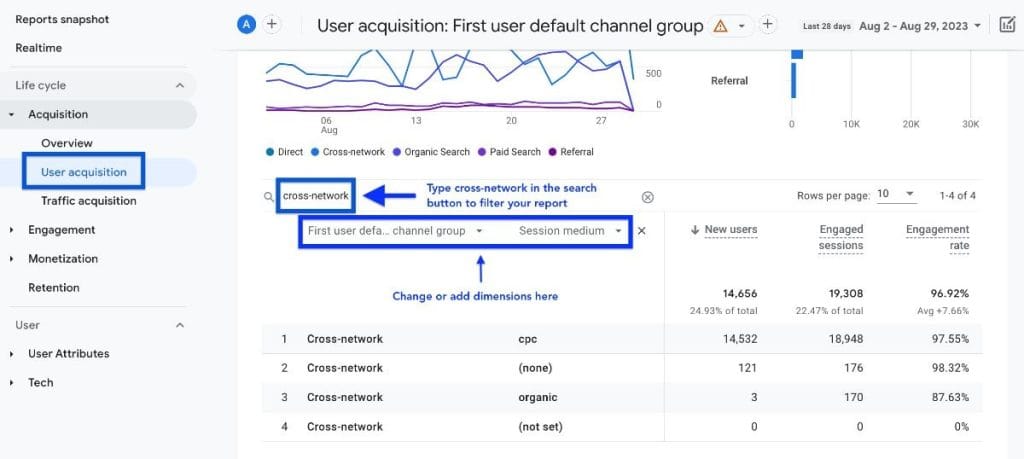
Ga4.com is credited.
Cross-network Data Attribution Problems In GA4
Google Analytics 4 (GA4) utilizes cross-network data attribution to track user behavior across multiple platforms and devices. Marketers can gain a better understanding of the entire consumer journey as a result. However, accurately connecting user data across networks is a challenge for GA4. These problems can skew analysis and affect how data is presented.
Difficulties in Monitoring Users on Various Networks
GA4 targets individuals through various online platforms, including applications and websites.
- Consistently tracking users is difficult because
- Various browsers and device kinds
- Blocking tracking cookies in privacy settings
- Users switching devices or deleting cookies
It is challenging to witness the entire journey due to these issues, which result in partial user data being available.
Effects of Limitations and Data Sampling
To handle big data sets, GA4 employs data sampling. This indicates that GA4 only examines a subset of the data. Sampling may:
- Decrease the precision of the data.
- Skew the findings of attribution.
- Ignore minor but significant sources of traffic.
Sampling restrictions particularly impact complex cross-network reports.
Limitations of the Attribution Model in Ga4
Google Analytics 4 (GA4) supports a variety of attribution models, including data-driven and last-click attribution. Credit allocation varies by each model. Issues consist of:
- Models may not reflect real user behavior.
- Large datasets are necessary for data-driven models to function effectively.
- Not all business kinds may be able to use attribution windows.
Inaccurate assumptions regarding channel performance may result from this.
Differences in Data Across Networks
Information from multiple sources is used in cross-network tracking. These sources may report differently due to:
| Source | Typical Inconsistency | Justification |
| Analytics for Websites | Differences in the number of sessions | Different session timeout settings |
| Applications for Mobile | Delays in event tracking | Limitations on the background activity of apps |
| Advertising Networks | Lagged conversion reporting | Differences in the attribution window |
These disparities complicate a uniform perspective of user actions.
How to Resolve Attribution Problems Across Networks
Google Analytics data can be confusing due to cross-network attribution problems. When user behaviors on many platforms don't link properly, these issues arise. Resolving these issues enhances data accuracy and facilitates a deeper understanding of user behavior.
Turn on User-ID Monitoring
- In the Google Analytics property settings, create a User-ID.
- Give visitors distinct IDs when they visit your website or log in.
- With every hit, send Google Analytics the User-ID.
Result: By tracking users across devices and networks, analytics can lower the number of duplicates.
Employ Uniform Utm Parameters
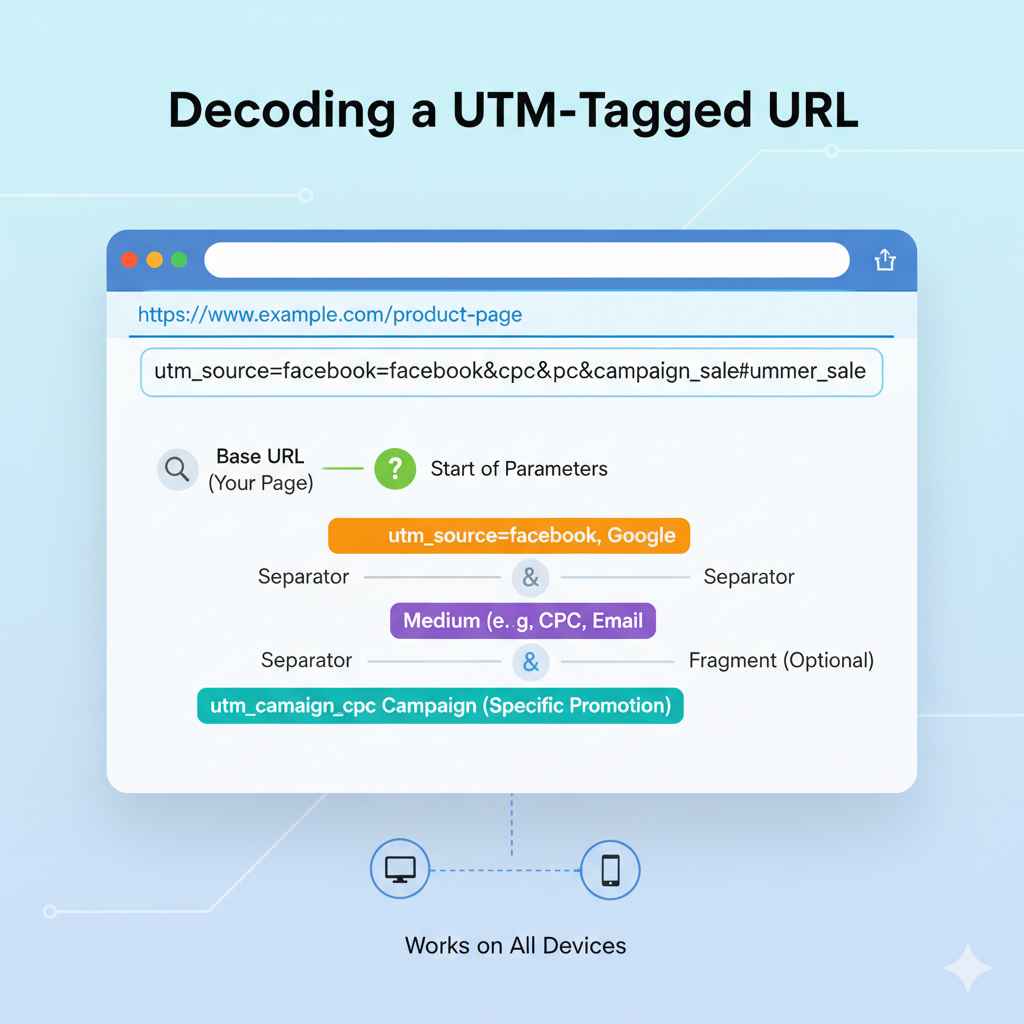
UTM parameters monitor the traffic's source, medium, and campaign. It is essential to maintain consistency across all marketing platforms.
| UTM Parameter | Goal | Example |
| utm_source | Determines the source of the traffic (e.g., Facebook, Google). | google, newsletter, twitter |
| utm_medium | Identifies the marketing channel (e.g., email, CPC). | cpc, email, social, referral |
| utm_campaign | Identifies a specific product promotion or strategic campaign. | summer_sale, black_friday_2024 |
Keeps track of particular promos or campaigns.
To avoid misattribution, make sure all channels adhere to the same UTM name guidelines.
Connect Google Ads, Analytics, and Other Platforms. Integration enables the combination of data from multiple systems into a single report.
- In Google Analytics, select Admin > Product Linking.
- Choose Google Ads or alternative advertising networks.
- Verify permissions and follow the linking instructions.
Benefit: Data is seamlessly transferred between platforms, enhancing the accuracy of cross-network attribution.
Modify Attribution Models
Google Analytics credits conversions using attribution models.
Choose a model that complements your marketing approach:
- Last Click: The final touchpoint receives credit.
- First Click: The initial interaction is given credit.
- Linear: Every touchpoint receives the same amount of credit.
To more accurately depict user journeys across networks, carefully select models.
Examine the list of referral exclusions.
When users switch between domains, referral exclusions keep sessions from ending.
- Incorporate your own domains into the list of exclusions for referrals.
- Don't include third-party platforms or payment methods that disrupt sessions.
Configuring Cross-Network Monitoring
Google Analytics' Cross-Device Tracking feature facilitates user tracking across multiple platforms and devices. It displays the flow of users between various networks, including social media, apps, and websites. This tracking provides a clear picture of user behavior and campaign performance.
Building a Cross-Network Google Analytics Property
To begin, create a new Google Analytics property specifically for tracking across networks.
- Open your Google Analytics account and log in.
- Click Create Property in the Admin panel.
- Select Web + App as the appropriate property type.
- Enter the information for your app and website.
- To create the tracking ID, click Create.
Putting the Global Site Tag (gtag.js) into Practice
Data is gathered from all networks and sent to Google Analytics via the Global Site Tag.
- Make a copy of the tracking code supplied.
- Please copy and paste it into the relevant part of your website.
- Use the Firebase SDK to add the same tag to your application.
An example of a snippet of code
Connecting Google Ads, Analytics, and Other Platforms
For consolidated statistics, connect your Google Analytics property to Google Ads and other platforms.
- Navigate to Google Ads Linking under Admin > Product Linking.
- Choose which Google Ads accounts to connect.
- To improve tracking, turn on auto-tagging.
- Verify and bookmark the URL.
Repeat this process for other platforms, such as BigQuery or Search Console.
Setting Up User ID for Cross-Device Monitoring
Tracking specific users across devices and sessions is made easier using User-ID.
- In the Google Analytics property settings, enable User-ID.
- Give each user on your app or website a unique ID.
- Use gtag('set', {'user_id': 'USER_ID'}); to send the User-ID with every click.
- Examine Google Analytics' User-ID reports.
Cross-Network Tracking Testing and Verification
Testing guarantees that your configuration functions properly on all networks.
- To verify tag installation, use Google Tag Assistant.
- Look for activity in Google Analytics' realtime reports.
- Test tracking across various platforms and devices.
- Address any problems with inaccurate or missing data.
The Best Methods for Analyzing Networks
Google Analytics' cross-network analysis feature helps in understanding user activity across multiple platforms. It shows how customers interact with your business across various digital platforms, including websites and mobile apps. By adhering to best practices, you may increase data accuracy and make more informed marketing decisions.
Employ Uniform Tracking IDs Throughout Networks
Ensure that every platform uses the same tracking ID. This procedure prevents duplication and maintains user data consistency. It enables Google Analytics to identify users across multiple channels and devices, providing a more comprehensive view of their experience.
Properly Configure Cross-domain Tracking
Sessions from many websites or domains are linked via cross-domain tracking. Set it up by enabling linker options and adding a tracking code to every domain. This configuration offers smooth user monitoring by preventing sessions from being tallied independently.
Use User ID to Ensure Precise User Monitoring
You may track specific users across devices with User-ID. Give logged-in users unique IDs and forward them to Google Analytics. This method increases the precision of customer lifetime value and cross-network behavior measurements.
Divide Data by Device and Network
Sort your data according to network type, device, or channel. To examine performance independently, use segments. This technique identifies the networks that generate the most traffic or conversions and highlights areas that require improvement.
Check Your Data Frequently for Consistency
To identify tracking problems or discrepancies, review your data frequently. To identify issues early, use Google Analytics debug tools and reports. Better insights and decisions result from clean, trustworthy data.
Table: Summary of Important Best Practices
| The Best Method | Goal | Advantage |
| Reliable Tracking IDs | Combine data from several platforms. | Unambiguous user journey. |
| Cross-Domain Monitoring | Connect sessions across several domains. | Smooth user monitoring. |
| Implementation of User-ID | Keep track of users across devices. | Precise behavior analysis. |
| Data Segmentation | Examine by device and channel. | Determine which networks are operating well. |
| Frequent audits of data | Identify and resolve tracking problems. | Trustworthy observations. |
Benefits Of Cross-Network Data
Google Analytics' Cross-Channel data displays how customers engage with your brand across multiple channels. It aggregates information from apps, websites, and other online platforms. Businesses are better able to comprehend consumer behavior thanks to this unified view. The advantages of this data are obvious. It enhances decision-making and marketing tactics. These are a few significant benefits of cross-network data.
Better Monitoring of User Journeys
Users are tracked across multiple platforms and devices using cross-network data. It shows how users navigate your app, website, and other platforms. This helps identify the entire client journey, rather than just its component pieces.
Demonstrates the channels that generate the most interaction.
- Aids in locating the user drop-off location
- Encourages improved customisation and targeting
- Improved Analysis of Marketing Performance
Better Marketing Performance Analysis
Accurately measuring marketing activities is made possible by combining data from multiple networks. It displays the campaigns that perform effectively and poorly across platforms.
| Advantage | Explanation |
| Accuracy of Attribution | Gives the appropriate channel credit for conversions, ensuring you know exactly where sales are coming from. |
| Cost-Effectiveness | Determines which channels perform best so you can allocate your budget wisely and cut waste. |
| Campaign Optimization | Allows you to adapt and refine your marketing tactics in real-time based on combined data findings. |
Improved Knowledge of Customers
You can gain a better understanding of your audience by utilizing cross-network data. It consolidates data from multiple platforms into a single location.
- Recognize the behaviors and preferences of your customers.
- Recognize patterns across several platforms.
- Users should be divided up for customized marketing.
Simplified Analysis and Reporting
There is only one report that contains all of the data from various sources. Time is saved, and the possibility of mistakes from manual data integration is decreased.
- Comparing performance across channels is simple.
- Decision-making is quicker with consolidated insights.
- makes team communication easier
The Need for Cross-Network Monitoring in GA4
In GA4, cross-network tracking refers to monitoring user behavior across many platforms and devices. It provides a comprehensive view of how customers interact with your brand across all platforms, including mobile apps, websites, and other digital channels. Gaining insight into this behavior enhances user experience and marketing.
Because GA4 can connect data points from several sources, cross-network tracking is essential. Clear insights into user journeys and campaign performance are made possible by this relationship. Data remains fractured and incomplete in its absence.
Why Cross-Network Tracking Is Important
Cross-Network Tracking aids in precise user identification. It connects sessions across channels and devices. This tracking prevents users or conversions from being counted twice.
- Enhanced User Insights: Track the entire process from initial interaction to final action.
- Better Attribution: Give the appropriate marketing channels credit.
- Consistent Data: For better decision-making, obtain consistent data across platforms.
How Cross Network Tracking Increases Marketing Efficiency
Precise data is the foundation of successful marketing campaigns. Cross Network Tracking displays user dropoff points and the most effective channels.
- Monitor campaigns on social media, apps, and the web.
- Concentrate on channels that produce results to maximize your budget.
- Reduce wasteful spending on platforms that don't function effectively.
The Main Advantages Of Cross-Network Tracking With GA4
| Feature | Advantage |
| Measurement Based on the User | Provides a consistent perspective by tracking consumers across devices (e.g., Mobile to Desktop). |
| Model of Event-Based Data | Records intricate interactions (scrolls, clicks, video views) that go beyond simple pageviews. |
| Combined Reporting | Combines web and mobile app data into a single, unified report. |
| Better Models of Attribution | More precisely assigns conversion credit using data-driven logic rather than just "last click." |
How to Put Cross-Network Tracking Into Practice in GA4
In GA4, begin by connecting the properties of your website and app. For tracking, use the same measurement ID. To keep track of logged-in users, enable user ID functionality.
- Configure each platform's data streams.
- Set up the consent and user ID settings.
- Check the accuracy of tracking across devices.
How to Configure Ga4's Cross Network Tracking
Google Analytics 4 (GA4)'s Cross-Network Tracking feature enables you to view user behavior across multiple platforms and devices. You can have a better understanding of user journeys by setting up this tracking. This tutorial guides you through the straightforward process of configuring cross-network tracking in Google Analytics 4 (GA4).
Establishing A Ga4 Property For Tracking Across Networks
Use an already-existing GA4 property or start by establishing a new one. This Property will gather data from all platforms and networks.
- Open your Google Analytics account and log in.
- In the lower-left corner, click Admin.
- Choose the desired Account under Account.
- Click Create Property under Property.
- Select GA4 as the property type when completing the property details.
- Click "Create."
Configuring Data Streams for Various Networks
GA4 is connected to your websites, apps, and other digital platforms through data streams. For every network you wish to monitor, add a data stream.
- Visit the GA4 property you own.
- Click on the property column and select Data Streams.
- After selecting Add Stream, select the platform (iOS, Android, or Web).
- Enter the app's information or URL.
- To complete the setup, follow the on-screen instructions.
Putting the Ga4 Tracking Code into Practice
Add the GA4 tracking code to your platforms after creating data streams. Data is sent to your GA4 property by this code.
- Include the gtag.js snippet in the HTML section of your website.
- To connect to GA4 for mobile apps, use the Firebase SDK.
Connecting Other Google Products With Google Ads
Link your GA4 property to Google Ads and other Google services. This makes it easier to monitor consumer interaction across platforms and adverts.
- In GA4, go to Admin.
- Choose Google Ads Linking under Product Links.
- Select which Google Ads accounts to connect.
- To finish the linking process, adhere to the instructions.
Setting Up User ID for Cross-Device Monitoring
GA4 can identify users across devices thanks to User-ID. To increase the accuracy of cross-network tracking, set up User-ID.
- Assign a unique ID to every user in your system.
- Use the tracking code or SDK to provide this ID to Google Analytics 4 (GA4).
- In GA4's admin settings, enable User-ID reporting.
- Examining and Verifying Cross-Network Monitoring
Verify that your setup is operating correctly. To verify data flow, use GA4's DebugView and Realtime reports.
- Launch your application or website, and then perform test actions.
- To view live events, navigate to GA4 and select DebugView.
- Verify data from all networks by reviewing real-time reports.
Essential Metrics to Monitor in Ga4 Using Cross-Network Analytics
You can monitor user behavior across multiple platforms and devices using GA4's Cross-Device Analytics. Users' interactions with your brand across websites, applications, and other platforms are displayed in this single view. Being aware of the critical metrics to monitor enhances user experience and marketing.
This indicator displays the number of sessions that originate from each network source, such as social media, sponsored advertisements, and organic search. It shows which channels receive the most traffic.
- Why follow it? Concentrate your funds on channels that yield the best results.
- How should I utilize it? To improve ad placement, compare session counts across networks.
The engagement rate measures the level of user interaction with your website or application. Clicks, scrolling, and time spent are among the actions it records.
| Network | Rate of Engagement | Average Length of Session |
| Natural Search | 65% | 3m 20s |
| Sponsored Advertising | 55% | 2m 45s |
| Social Networks | 70% | 3m 50s |
To determine which network maintains user engagement, monitor this measure.
The conversion rate displays the percentage of users who complete specific objectives, such as making a purchase or signing up. It aids in evaluating how well a network motivates behavior.
- Determine which networks have the best conversion rates.
- Campaigns should be optimized for low-converting networks.
- Budgetary allocation should be based on performance.
This measure tracks the number of new or returning users from each network source. It aids in your comprehension of audience acquisition and loyalty.
- A high number of new users indicates room for expansion.
- High recurring users demonstrate strong engagement.
- Maintain a healthy user base by striking a balance between both.
Before conversion, GA4 monitors user movement between devices and networks. This metric reveals complex purchasing routes.
Track:
- Which gadgets do consumers begin and end their use of?
- The role of network sources in multi-device travel.
- Opportunities to enhance the user experience on specific devices.
Advanced Applications of Ga4 Cross-Network Data
Businesses can gain a deeper understanding of customer behavior across multiple platforms with GA4's advanced utilization of cross-network data. Information from websites, apps, and other digital channels is combined to create cross-network data. Better marketing tactics and more informed decisions are made possible by this cohesive viewpoint.
Improved Analysis of User Journeys
Users are tracked across multiple networks as they switch between platforms and devices. This helps determine the entire client journey, from initial contact to purchase. Knowing this path helps identify user dropoff points and conversion-boosting factors.
- Monitor website and mobile app touchpoints.
- Examine the amount of time spent on each platform.
- Determine the most common user routes and bottlenecks.
Enhancement of Attribution Modeling
GA4's cross-network data support more precise attribution models. Highlighting which marketing channels produce the best results gives credit to the appropriate ones.
| Model of Attribution | Advantage |
| Final Click | Gives credit to the last exchange before conversion. |
| Driven by Data | Assigns credit according to user activity using cross-network data. |
| Linear | Equitably allocates credit to each touchpoint. |
Tailored Advertising Campaigns
Tailored marketing messages are made possible by cross-network data. Users can be divided into groups by marketers according to how they interact with various platforms. Campaign performance is enhanced, and engagement rises as a result.
- Divide up consumers based on their platform and device usage.
- Create customized ads for specific user demographics.
- Analyze the campaign's influence across various networks.
Retargeting across platforms
Cross-network data is used in retargeting to reestablish connections with users across other platforms. By reminding users of things they have viewed, this method increases conversion rates.
- Determine which visitors to your website did not make a purchase.
- Display advertisements on social media or mobile apps.
- Retargeting should be modified according to user behavior across networks.
In conclusion
Google Analytics' Cross Network feature facilitates user tracking across devices. It displays how users engage with both your app and website. This data provides a clearer picture of user behavior. The channels that generate more visits and sales are visible to you.
Utilize this knowledge to refine your marketing plan. Cross-network tracking makes it easier to understand user paths. It helps you make more informed business decisions. To enhance your audience analysis, start using this function immediately.
FAQs About Cross Network in Google Analytics
How does Cross-Network help you keep an eye on users?
Cross Network consolidates user data from various platforms into a single view. It shows how people interact with your ads when they switch between Gmail, YouTube, and Search. This broad perspective encompasses the entire user experience, highlighting the most effective networks and helping to improve campaigns, thereby encouraging people to interact more.
Can you track users across both mobile and desktop networks?
Yes. GA4 receives campaign data from PCs and phones. It tracks sessions from users who click on your ads on any device or network and consolidates them in the Cross Network area. GA4 doesn't track an individual across devices unless they are logged in; however, it provides results from all devices and platforms combined.
Why do marketers need to use Cross-Network?
Cross Network shows how advertisements truly work. Often, modern campaigns utilize multiple Google services simultaneously. Cross Network provides marketers with a clear and consistent view of how their campaigns are performing. It prevents you from counting things twice, makes it easier to report, and helps you determine what's truly effective across all networks. This enables you to make more informed choices regarding your finances.
How can I get Google Analytics to track across networks?
To set up cross-network tracking, connect your Google Ads account to Google Analytics 4 (GA4). You can run advertising with Performance Max, Discovery, or Smart Shopping. GA4 automatically identifies them and groups sessions related to one another in your reports under Cross-Network. You don't have to do anything out of the ordinary, other than linking your accounts and running the right kinds of ads.
Does the Cross-Network Impact Report affect the accuracy of the data?
Cross Network makes things more precise by making sure that a session is only counted in one channel. GA4 assigns a primary channel to each session. This prevents double-counting, but it also means you cannot view specific breakdowns for each network in a cross-network campaign. You can view things clearly and from a high place without anything getting in the way.
Which Google Analytics versions let you track across networks?
Only Google Analytics 4 (GA4) can provide cross-network monitoring. Universal Analytics does not have this feature. One of GA4's new default channel groups is Cross Network. It was designed for ad tactics that work across multiple platforms.


