
I've seen brands succeed and lose for years. I've seen what makes a campaign work and what makes it fail. Every marketer wants to know what makes certain businesses stand out and others fade away. It's not by chance. The answer lies in the strength of recent innovative marketing campaigns. These aren't just ads; they're a part of our culture. They change how we think about brands, what we expect from them, and even how we shop.
I want to share a true story with you. A small coffee shop in my city just started a challenge on TikTok. It was just a dance with a cup bearing a brand. People were already lining up outside their store in just a few days. They didn't spend much money. They knew precisely how to capture people's attention and get them to take action. You can witness this at all levels, from little businesses to big businesses. The rules are changing, and the brands that can adapt to them are the ones that win.
If you're wondering, "Why do marketing campaigns fail?" or "How do recent ad campaigns work?"
This post gives you answers straight from the front lines. I'll explain the strategies, trends, and practical lessons behind recent innovative marketing campaigns that are shaping the future of our field.
What does mean by "Recent Innovative Marketing Campaigns"?
To be clear, innovative marketing isn't about going after every new tool or platform. It's about finding creative solutions to address genuine challenges. The finest recent imaginative marketing initiatives don't just sell products—they create moments, generate trust, and drive action.
Innovation is the intersection of creativity, technology, and strategy. Brands that lead aren't just louder; they're also smarter. They know their audience very well. They experiment rapidly. They're not afraid to ditch what isn't working and try something new.
All sources in the industry point to the same signs:
- Creativity: It means coming up with new ideas that you can't forget.
- Tech: Making things easier or more fun with AR, AI, or data.
- Focus on the audience: making real connections, not just leaving impressions.
- Experimentation: you have to try things out, learn from the results, and change quickly.
You're not only behind if you're still using the same playbook as five years ago; you're not even in the game. The best recent inventive marketing efforts suggest that risk and relevance are inextricably linked.
9 Great Examples of New Ways to Market Your Business
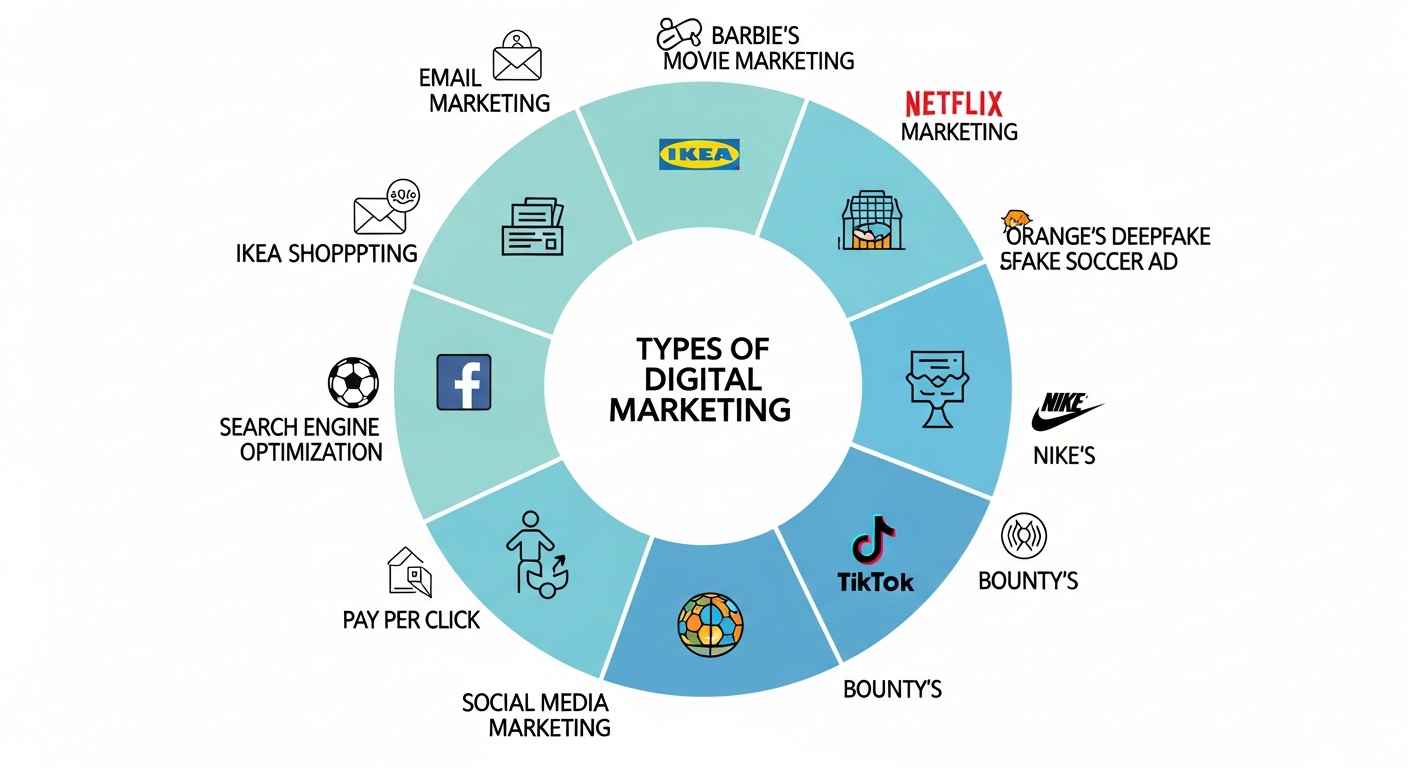
Let's examine nine recent innovative marketing campaigns that demonstrate what's possible. I'll explain why each one worked and demonstrate how to apply the same logic.
1. Barbie's Movie Campaign That Went Viral
Who would have thought that a doll from decades ago would break box office records in 2023? Barbie's team turned nostalgia into a movement. They utilized memes, partnerships with popular individuals, and user-generated content to generate excitement long before the movie's release in theaters.
What made it innovative:
- Fans could build their own Barbie posters and share them online.
- The campaign appeared everywhere—on TikTok dances, Instagram filters, and even on street murals.
- They used humor and pop culture to let fans tell the story.
What marketers can learn:
- Make the people you are talking to the hero.
- Give people the tools they need to get involved.
- When utilized honestly, humor and nostalgia are substantial.
2. The Augmented Reality App from IKEA
When you went shopping for furniture, you had to guess if a couch would fit. With their AR app, IKEA fixed this problem. You could now see how that couch would look in your living room before you bought it.
What made it new:
- AR isn't simply a cool piece of technology; it really worked.
- Shopping in-store and on your phone should be easy.
- The software made shopping fun by encouraging users to "play" with the items.
What marketers can learn:
- Use technology to make shopping easier.
- Useful new things are often more valuable than flashy ones.
- Encourage exploration—don't simply sell.
3. Stranger Things Pop-Ups on Netflix
When Stranger Things returned, Netflix didn't just broadcast ads—they organized pop-up stores, themed events, and interactive experiences in cities worldwide. Fans waited in line for hours to get inside the "Upside Down."
What made it innovative:
- Mixed digital hype with things that happened in real life.
- Made people very excited on social media by using FOMO and situations that could be shared.
- Engaged the audience as active participants.
What marketers can learn:
- People may be more interested in online activities after having fun offline.
- When something is rare or hard to obtain, it generates excitement among people.
- Don't just let fans see your brand on a screen; let them meet it in person.
4. Orange's Deepfake Soccer Ad
In France switched the faces of men and women soccer players using deepfake technology. This proved that the incredible plays that people thought were by men's teams were actually by women's teams. The reveal made headlines and prompted people to reevaluate what they thought they knew.
What was different about it:
- Used the latest technology to make a point about society.
- Started a topic and much controversy (which spread widely).
- Connected the message directly to the brand's values.
What marketers may learn:
- Don't be scared to stand up for what you believe or question what you think.
- Technology should help tell the story, not get in the way of it.
- Campaigns that prompt thought have a lasting impact.
5. Facebook Retargeting for Myfix Cycles
Myfix Cycles, a bike business that sells directly to customers, saw many people leaving their carts. Instead of just shrugging, they used Facebook retargeting to remind people about their carts and provide a modest incentive to complete the purchase.
What made it new:
- Ads that are tailored to your real-life behavior.
- Used to change losses into victories.
- Easy to understand, cheap, and easy to measure.
What marketers may learn:
- Follow-up based on data can save a missed chance.
- Personalization is more like customer service than just advertising.
- Minor changes to targeting can make a tremendous difference.
6. The Countdown from Flo Health on Instagram
Flo Health, a women's health app, did a "pregnancy countdown" on Instagram for pregnant women. Every day, they got fresh statistics, advice, and words of support.
What was new about it:
- Consistent material that made people excited and loyal.
- Community-driven: followers could share their stories and advice.
- Made a clinical subject into something personal and encouraging.
What marketers may learn:
- People keep coming back for content series.
- Community is more important than the quality of the production.
- Simple, regular updates are as effective as showy marketing.
7. Nike's "You Can't Stop Us" Split-Screen Movie
Nike's movie featured players from various sports, backgrounds, and nations in split-screen views that moved in perfect synchronization with each other. The message is that sports bring us all together.
What made it new:
- Visually stunning and emotionally powerful tale.
- Linked the brand to hope and strength amid challenging times.
- Used a wide range of global talent to make it more appealing.
Things marketers can learn:
- Invest in creative work that evokes emotions in people.
- Diversity and inclusion are not a choice; they are a requirement.
- Your brand will be remembered if you tell great stories.
8. Bounty's "Spills" in the Guerrilla
Bounty put big, false spills in the middle of busy city streets. For example, a vast, tipped-over coffee cup with brown liquid all over the ground. It caught people's attention and made them grin.
What was new about it:
- Physical installations that went viral on social media.
- "Bounty cleans up big messes" is the simple message.
- Naturally, this promoted sharing and word of mouth.
What marketers may learn:
- Guerrilla marketing still works, but only if it's bright and easy.
- Make your point so clear that someone walking by can understand it immediately.
- Offline antics can help you reach a significantly larger audience online.
9. The TikTok mascot for Duolingo
The green owl from Duolingo is all over TikTok. It's hilarious, self-aware, and sometimes a touch wild. The brand doesn't only put up ads. It follows trends, makes fun of itself, and talks to users.
What made it new:
- The mascot doesn't resemble a business logo; it appears to be a character.
- The brand voice aligns with the platform: it's casual and fast-paced.
- Regular interaction converts casual users into fans.
What marketers may learn:
- Let your brand's personality shine through, even if it's a little strange.
- Join the conversation and meet your audience where they are.
- Every time, authenticity beats gloss.
The New Frontier for Brand Marketing: Influence from Young People
Follow the young people if you want to know where marketing is going. Gen Z and younger millennials change culture quickly. They choose what's cool, what's not, and what gets shared.
Recent creative marketing initiatives have leveraged this by enabling young people to share their own stories. TikTok is where it all starts. Companies like Chipotle, Crocs, and even Dunkin' Donuts have gained popularity by encouraging people to participate in challenges, dances, and create their own content.
Why does this work? Young people want to be a part of things, not just watch. They trust their friends and creators more than famous people. They use social media to showcase themselves.
Here is the blu print for marketers:
- Get your audience involved right away.
- Don't just use actors; use genuine people.
- Surrender control and let your community decide the message.
Values Over Hype: The New Trend in Purpose-Driven Brand Marketing
People care bout what brands stand for. Having a snappy phrase or cool pictures isn't enough. New and creative marketing initiatives are most effective when they are grounded in genuine principles, whether social, environmental, or cultural.
Patagonia's "Don't Buy This Jacket" campaign did more than merely sell garments. It sparked discussions about responsibility and consumption. Ben & Jerry's doesn't only talk about ice cream on their platforms; they also talk about climate change and equality.
When it's honest, purpose-driven marketing works; people notice when a brand's activities align with its values. They call it out right away if they don't like it. That's why so many recent ad campaigns have failed: the messaging doesn't reflect what really happens.
Start with your mission if you want to develop trust. Let it help you with your creativity, your partnerships, and your customers' experiences.
The Change in Brand Storytelling Through Pictures
Pictures are more important than ever. People scroll quickly. You have just a few seconds to get people's attention. Recent innovative marketing campaigns utilize large images, short videos, and interactive graphics to convey their message effectively.
Consider the creators of Barbie's memes or Nike's dual-screen movies. People can "see" before they buy with IKEA's AR. Companies of all sizes, from startups to Fortune 500 companies, are investing in images that tell a story, instead of just selling a product.
If you're a marketer:
- Use animation and video to make yourself stand out.
- Try AR or VR to see whether it works for your audience.
- Not just features, but stories too.
Micro-Influencers Making a Splash
Please stop trying to get fam us people to follow you. Many brands achieve better results with micro-influencers, who have smaller but highly active followings. Why? Believe.
Micro-influencers have helped sell out products from skincare and food firms with just one Instagram post. These creators talk to the people in their neighborhood. What they suggest seems real.
If you wish to collaborate with micro-influencers:
- Look for people who already like what you sell.
- Let them be creative.
- Don't just publish once; focus on creating relationships.
New and creative marketing initiatives that utilize these networks generally attract more people, cost less, and have longer-lasting effects.
Making Data Work
There is data all around us. What you do with it makes the difference. Recent innovative marketing campaigns leverage data to make everything more personal, targeted, and measurable.
Amazon suggests products based on your previous viewing history. Spotify makes playlists just for you. With clever marketing, Myfix Cycles gets people to finish their purchases. This isn't about "big data"; it's about useful, smart information.
The main point for marketers is easy:
- Use analytics to find out what's working.
- Make your emails, advertising, and landing pages more personal.
- Always test and make changes.
You're just guessing if your marketing isn't based on data. In marketing, making guesses can be costly.
Content That Changes the Rules
Content is still king, but only if it keeps people interested. The most recent creative marketing efforts produce material that people want to engage with, rather than just read.
All of these things—quizzes, challenges, AR filters, and games—ask people to join in. Duolingo's streaks, BuzzFeed quizzes, and Instagram Q&As keep people coming back for more. B2B brands also employ webinars and interactive whitepapers to teach and sell.
If you want your content to be different:
- Make it fun to do.
- Give folks a reason to talk.
- Use feedback to make improvements and enhance your performance.
AI Tools Make Content Smarter
AI isn't just a fad; it's a tool. Marketers utilize AI to write, analyze, and customize a wide range of materials. Jasper, ChatGPT, Grammarly, and other tools make it simple to test headlines, write emails, and even construct chatbots.
The key is to mix the speed of AI with the creativity of people. The best campaigns leverage AI to do the heavy lifting, enabling marketers to concentrate on generating innovative ideas.
New Ways to Market on Social Media
Social media is constantly evolving. People don't just post updates there anymore; they also shop, ask questions, and talk to brands.
Instagram, TikTok, and Snapchat are all full-service stores where you can find new and creative ways to promote your business. Live shopping, influencer takeovers, and shoppable posts enable users to make purchases directly within the app, streamlining the shopping experience. If you still think of social as a side project, you're missing the main event.
Social media sites are like stores now.
Nike and Sephora's feeds allow people to make purchases immediately. It's easy to buy because there are live product demos, Q&A sessions, and quick checkouts.
- Brands that quickly try out new formats and features get ahead.
- You can't just start when you want to change a brand's identity.
- Brands that succeed are constantly evolving.
- Gucci got younger, Old Spice got weirder, and Lego became a massive source of content.
Many new and creative marketing ideas begin with a fresh brand story that showcases what customers are currently interested in. Marketers need to pay attention and adapt. What worked last year might not work this year. Brands that stay in touch with their customers and aren't scared to evolve are the ones who remain relevant.
Marketing Smart Solutions
Not every marketer has the money to spend on the Super Bowl. That's okay. It's easier than ever to get the tools and strategies behind new marketing efforts.
Begin with a tiny amount:
- Let consumers try out products before buying them with AR.
- Use chatbots to handle customer care.
- Create email journeys that help leads grow and advance.
Canva, Shopify, Mailchimp, and Hootsuite are all platforms that make it easy to test and learn. The best answer is the one that works for your team and aligns with your goals.
You don't want to have to inquire, "Why do marketing campaigns fail?" —keep learning, be open to new ideas, and put your audience first.
FAQ
What is new marketing, and how do the best businesses use it?
Innovative marketing is all about embracing new thinking, integrating modern technologies, or crafting creative strategies to give your business a unique edge. Companies like Netflix rely on data to tailor ads and suggestions uniquely for every user. People discuss Apple's new products and the stylish displays in their stores. These brands keep note of what their customers want and use new tools to reach them in more creative ways.
Can you provide examples of how successful brands utilize innovative marketing strategies?
Branded hashtag challenges on TikTok encourage users to create content, effectively making them brand ambassadors. Customers can use AR (augmented reality) to see how IKEA furniture would look in their homes. People looked for their names and shared pictures because Coca-Cola's "Share a Coke" bottles were personalized with their names. These brands include customers in the story.
Where can I find examples of new marketing in the tech industry?
Check out sites like Adweek, HubSpot, and Think with Google. These sites feature real-life examples from companies such as Google, Apple, and Amazon. Case studies typically cover the strategy, tools, and results, making it easy to see what worked.
What are the four kinds of new ideas?
There are four types: product innovation, process innovation, marketing innovation, and organizational innovation. When a company introduces new features or products, that's called product innovation. Process innovation refers to finding more efficient ways to produce or deliver goods and services. New ways to market or sell are what marketing innovation means. When a company makes changes to its structure or culture, it is said to be "organizational innovation."


